Written by: Benita Altier LVT, VTS (Dentistry)
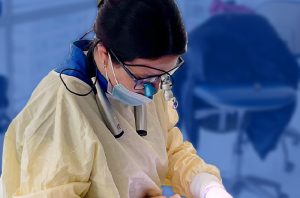
There are a few important considerations when choosing the right lighting and magnification for daily use in veterinary dentistry. Your objective may be to contribute to better patient outcomes, increase efficiency, and decrease work-related musculoskeletal injuries and lost work time.
Choosing the Best Lights and Loupes
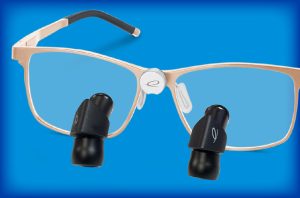
Selecting Loupes
- Magnification Levels: Magnification levels are an important consideration when entering the world of lighting and loupes. Introductory levels of magnification are often best for veterinary dentistry so that you have a fairly large visual field without losing visual acuity. When trying options, consider beginning with 2.0 or 2.5 vs. the higher levels of magnification.
- Field of View and Depth of Field: Working in the oral cavity of animals presents some unique challenges compared to human dentistry. Patients often have small mouths, and the depth of their oral cavity makes it difficult to visualize areas in the back of the mouth. Consulting someone who understands how important it is to have magnification that allows for a wider and deeper depth of field is critical.
- Ergonomics: When it comes to your comfort when deciding which type of loupes to buy or whether they should be customized to fit you versus adjustable pupillary distance or angle of declination, it is important to gain a better understanding of how the ergonomics of poorly fitting loupes may actually cause strains and pains compared to those that are customized to your specific ocular and facial anatomy.
- Proper fit is very important, considering the often-lengthy procedures that many veterinary professionals perform on animals.
Practical Tips:
- Quality lighting and magnification require you to try on different frames and configurations to determine which fits your needs and comfort level. Consider having a product representative visit you to configure and customize the equipment to match your objectives and needs.
- Companies that offer these options often attend some of the larger veterinary conferences so stopping by to see them in the exhibit halls is a great way to learn more about the options and to try on the products.
- Consider consulting with colleagues or reading reviews to learn more about the brands out there.
- Support after the purchase is key; it is very important to consider what the company offers here because if you need adjustments or assistance, you want to trust the company will be there for you moving forward into your dentistry future.
Choosing the Right Lighting
- Light Intensity and Color Temperature: Do not underestimate the importance of adjustable light intensity and a natural daylight color temperature; when differentiating between dentin, enamel, cementum, and bone, you want to easily see those color changes. Eye strain is reduced when the light source provides clarity.
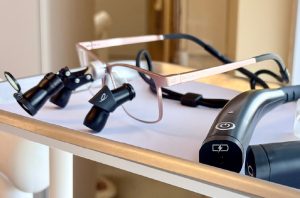
- Position and Type of Lighting: Veterinary medicine has been plagued with poor lighting conditions. Even in surgery, it is difficult to adjust overhead lighting well enough that the surgeon is looking where the light is directed. With dentistry and the dark oral cavity, it is very important to have focused lighting exactly where the operator is looking to avoid shadows. Lighting attached to ergonomic and well-fitting loupes allows the light field to be directed at the operatory field all of the time. This gives ultimate mobility for your lighting source.
- Battery Life and Portability: There are more options than ever for portable lighting that pairs well with magnification loupes. Research the options and what seems to agree with your working patterns. It is important to not have difficult cords, the weight of the cords pulling at your loupes, or a short battery life.
- Popular options are the around-the-neck rechargeable battery, which has a short cord attached to the light source, which is then attached to the front of the loupes, or a longer cord to an even longer-lasting battery pack that can be worn on a beltor in your pocket.
Practical Tips:
- Ensure the light source is adjustable and provides even illumination.
- Check that the lighting system can be easily integrated into your existing setup.
Maintenance and Care of Loupes and Lights
Loupes Maintenance
- Cleaning and Storage: Individual manufacturers have specific recommendations for maintaining clear and scratch-free lenses. To prevent damage, store loupes with magnification lenses in a case when not in use. Clean them only with a soft cloth and lens cleaning spray after each patient’s use.
- Adjustments and Repairs: Quality manufacturers of lighting and magnification loupes should offer periodic adjustments and equipment evaluations to ensure that the alignment and fit of your loupes remain as they were designed. Check with your product sales team to determine the process to have these done at least annually to protect your investment.
Lighting Maintenance
- Regular Cleaning: As with the loupes and magnification, it is important to gently clean off the light lens to ensure maximum adjustability of your light intensity and reduce shadows created by debris on the lens.
- Battery and Power Management: For battery-operated lights, ensure batteries are replaced or recharged regularly, avoid overcharging batteries, and follow the manufacturer’s recommendations.
Practical Tips:
- Perform routine checks on lighting equipment to ensure it is functioning correctly. Replace batteries or charge them before they are completely depleted to avoid interruptions during procedures.
Training and Adaptation
Training for Effective Use
- Initial Training: When adapting your dental practice to include the use of lighting and magnification, it is important to understand that training is necessary to learn how to implement this new tool without potential frustrations.
- Many new users of lighting and magnification report difficulties practicing new body postures; no longer do you need to lean forward and look to see fine detail. It takes practice to sit up straighter so the benefits of the magnification can be found. This is a great thing, but not what we have trained ourselves to do.
- Patience is key when it comes to adapting to new methods; however, if you persist in your practice, you will soon realize that better postures and less neck and eye strain can equal more efficient procedures and better patient outcomes.
- Continual Education: Adapting to the use of lighting and magnification will lead to an interest in learning more about how ergonomics in seating, tables, and workspace organization can lead to an even greater level of comfort and efficiency.
Practical Tips:
- Participate in training sessions offered by equipment manufacturers or professional trainers who teach dentistry and oral surgery for veterinarians and veterinary technicians.
- Practice using loupes and lights in a variety of procedures to build confidence and proficiency.
Adapting to New Tools
- Gradual Integration: When you first try magnification and lighting, introduce this to your procedures slowly and minimally at first. Start with a fairly short procedure that isn’t overly complex.
- Adjustment: Based on your assessment of what is working well when adapting to the new equipment, consider adjusting your working patterns when using lights and magnification loupes.
Practical Tips:
- Set aside time for practice with new equipment before using it in critical procedures.
- Regularly evaluate the effectiveness of the tools and adjust as needed.
Conclusion
- When it comes to veterinary dentistry and oral surgery, there are so many moving parts and challenges when it comes to performing procedures with a high level of success and efficiency.
- Critically, we must visualize with great acuity tiny root structures and difficult areas in the caudal mouth. Professionally constructed and customized lighting and loupe configurations have the potential to reduce patient time under anesthesia due to your increased efficiency and reduction in complications. The benefits to your well-being regarding a potential reduction in work-related musculoskeletal injury should not be overlooked.
- Take time to do your research; not all products are comparable, and not all products will work for everyone. The investment in the well-being of your patients and you are worth the effort to select, learn to use, and maintain a quality pair of magnification loupes and lighting system.
Benita Altier is a Licensed Veterinary Technician with a Veterinary Technician Specialty (VTS) in Dentistry. She teaches courses across the country through her company Pawsitive Dental Education. Learn more about her courses and education materials at https://pawsitivedental.com/